
Special to African Safari Series
By Phil Massaro
(Editor’s note – Good friend Phil Massaro hunts all around the world and is quite successful. He has always been a reliable, helpful, and compassionate mentor who has helped me with numerous issues as a hunter, and I am sure others say the same of him. Recently on a social media post I read how Phil humbly and transparently handled a “miss” on a rather expensive hunt. I asked him to write about it for us at The Hunting Wire so others could learn some good methods to coping when things don’t go our way in the field.)
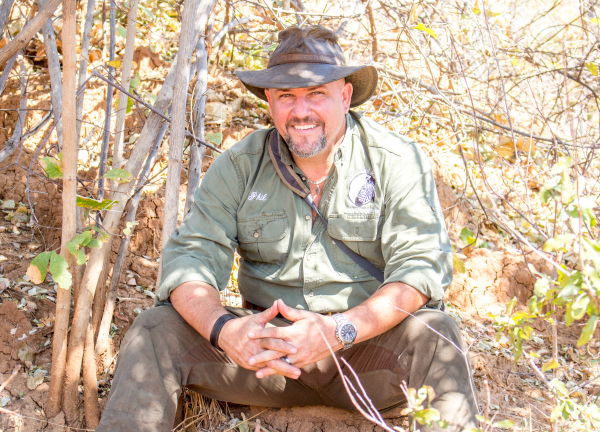
The safari started in the normal fashion, in spite of the challenges presented by travelling in the Covid-19 era. After an overnight at the famous Afton Safari Lodge in Johannesburg, South Africa, we traveled onto Harare, Zimbabwe and made the drive north to the Makuti Safari Area, located on the south side of Lake Kariba - that dammed up section of the Zambezi River. There were three of us: my hunting pal Dr. Mike McNulty, my wife Suzie and me, and we’d be hunting with Mbalabala Safaris for Cape buffalo and some plains game species. I’d be spending the week with Professional Hunter Lindon Stanton – owner of Mbalabala – looking for an old, worn buffalo, which I personally consider to be the consummate trophy, in spite of how the record book scoring methods indicate.
The rifles were sighted – I had brought along my beloved Heym Model 89B double rifle in .470 Nitro Express – and we were off to start tracking buffalo. I met Lindon’s duo of trackers, J.B. and Kahului, and the adventure began. The first couple days were spent working the fresh tracks we found at the sparse water holes throughout the steep, rocky concession, and each day we had great experiences, including a pair of dagga boys (those solitary bulls which leave the herd) just a bit too young for our tastes, and the opportunity to watch an entire herd of buffalo at just 30 yards. Over mountains, through the msasa forests and into the impossibly thick tall grass, hunting buffalo in Makuti is a test of any hunter. It was day four when I realized that the simple rolling of my ankle a couple of times on those rocks resulted in a sprain, yet when J.B. told me he had found the tracks of a lone dagga boy headed into a riverine thicket. This was perfect, as the chances of an older bull were greater, and there were fewer eyeballs and nostrils to fool. I quickly forgot the pain, and followed Lindon & Co. toward the riverbed.
I was third in line behind J.B. and Lindon when all hell broke loose, and the shaking of vegetation and thundering of hooves preceded the huge-bodied bull, running perpendicular from right to left. ‘Smoke him!!!” Lindon shouted, but with two people in front of me and a running bull there is no way I’d have even entertained the idea. But this was exactly the bull we were looking for: smooth, polished bosses, 41”-42” wide, with broomed tips and the white, mite-ridden face of an old kahkuli. So, the long tracking job began, following the fresh spoor of this handsome fellow. Again, we were led over hill and into valley, across the burns and through the grass, to the tune of a five-mile walk. In the midday heat, we figured he might lay up in the shade, and we climbed a tall hill to try and get a view of His Majesty. Lindon spotted him at 350 yards, lying under a prominent green tree across the valley. A stalk was planned, and thirty minutes of creeping through the dry vegetation put us at that tree, however His Highness wasn't at home. Working the wind very carefully – Lindon was certain he hadn’t gone far at all – we caught sight of the bull at 60 yards. A glance through the bino confirmed it was him, and we inched forward to a better vantage point about 45 to 50 yards from the bull. I had a small window, maybe two feet by two feet, but could clearly see the onside leg and vital area. Leaning against a small tree, I aligned the sights of the .470 as I’d done on many bulls before, held just on the back line of foreleg one-third of the way up the body, and broke the trigger of the right barrel. I could hear the hit, and the bull disappeared before I could come out of recoil, though Lindon sent a 500-grain solid after him, but we both heard that bullet whine in the distance, indicating a miss. We heard the bull running off, followed by a crash and then silence. My optimism rose when we found blood but faded when we found a large piece of fatty meat, indicating a hit in the brisket. Somehow, my shot had hit a small branch and deflected to the left. Tracking commenced again, this time with a different flair, as we had a wounded buffalo on the other end of the tracks.
Wounded buffalo can be a scary proposition, so we went slowly and alertly, and with each step I was hoping somehow, we’d find him dead. This went on until dark, when we had to pull out and resign ourselves to regaining the trail at first light. We did just that, and tracked that bull all day long, getting closer all the while, although the blood had stopped altogether. At last light of the second day, we heard him in another thicket, just 50 yards or so ahead, but it was simply too dangerous to risk someone getting hurt. I spent a restless night hoping for just one more opportunity at him, and we grabbed his tracks again at the first good light. We tracked him all morning, only to hear the jake brake of a truck on the main road which was the boundary of our concession. At noon, all hope was lost when the bull’s tracks crossed the road, and my hunt had officially ended. As is African law, once having drawn blood I was required to pay the full trophy fee, and as there were no more buffalo on quota, I had to hang up the double.
Based on the GPS, we had tracked that wounded bull for almost 20 miles from where I shot him, and I couldn’t be more appreciative of the efforts made by Lindon, J.B. and Kahului, as they truly put on a clinic regarding following a single bull’s track through a diverse concession. Humbly, I feel good that we were certain that the wound was superficial, as we examined his stool numerous times, and there was no blood which would’ve indicated a gut shot, so this bull would survive. I have replayed the shot a million times in my head, and I am certain of where I held, and where the bead was when the trigger broke. I suppose if you hunt buffalo enough, things like this happen eventually, though I can’t express what a sickening feeling it is to me. I’ve always practiced diligently to make sure I can take game cleanly – especially dangerous game which can hurt or kill someone when wounded – and I don’t really think that a scoped rifle would’ve made much of a difference in this situation. With iron sights, the shooter is focused on the front bead and the target, and it doesn’t take a large branch or stick to deflect a bullet; the myth of brush-busting cartridges is pure fancy.
I’ve taken various species of buffalo on three continents, and Cape buffalo in three African countries; each type of terrain poses its own unique challenges. I can tell you that among the hundreds of bulls I've looked at across southern and eastern Africa, this bull was the most impressive specimen I've ever seen. Though he wasn't mortally wounded, I feel more terrible that I wounded him than for the fact that I couldn’t recover him. Mishaps aren’t uncommon in the hunting fields, no matter how hard you train and prepare, and although we got good and close, Mother Nature will inevitably hand you some humbling lessons from time to time. I feel better knowing how hard we all worked to make sure every effort was made to recover the bull and walking nearly 20 miles on a sprained ankle (which is iced and elevated as I write these words) made the event unforgettable. Once again, I want to thank Lindon Stanton and his excellent crew for not giving up in spite of the arduous conditions; I just wish we’d have had one more crack at that old boy.
So, how does one cope with the prospect of losing an animal, especially when it is on what may be the hunt of a lifetime? Though it hasn’t happened often to me, it has happened, and whether it’s the Cape buffalo of a lifetime or a tom turkey in the back forty, it grates on me. I tend to beat myself up for days (still in that mode) but that probably isn’t the best plan. If you know you’ve done everything possible to make a good, clean shot and you’re certain that all efforts were made for recovery, you’ve simply got to move on. However, if there’s even a slight chance of finding that animal, go for it. I once had a bullet blow up on a whitetail here at home in the Hudson Valley and tracked that buck for nearly a mile through impossibly thick stuff only to (miraculously) find him on the shore of the river itself. But if recovery is fruitless, make sure you take the time to enjoy the experience of the hunt itself. Thankfully, I had Lindon, Mike and Suzie to console my injured ego – and tease me a bit as well – but if I allowed this episode to ruin what was a truly fun safari, it would’ve added insult to injury.
Unless your hunt is canned, nothing is guaranteed, so I try to lean heavily upon the hunting experience – the scenery, watching the trackers work their magic, those wonderful moments of camaraderie during each day – as much if not more than the kill and the trophy on the wall. In a strange sort of way, this experience may end up more memorable than actually having the bull in my possession. And after all, memories made with friends and loved ones are the most precious part of any hunt; to me they are much more important than inches of horn or figured walnut.
Phil Massaro is a freelance outdoor writer and Editor-in-Chief of the Gun Digest Annual. He is happiest in the wild places left on earth, with rifle in hand.