
This is supposed to be a series about hunting squirrels with a handgun, so naturally we’re going to start by not talking about handguns.
We need to find some squirrels first, and that means talking about habitat. More importantly, we need squirrels close. How close? Think Labrador retriever when you have pizza close. Our self-imposed rule for this adventure is about 25 yards, which means the real challenge isn’t choosing a handgun. It’s learning enough about squirrels to consistently get inside handgun range, because the most accurate handgun on Earth isn’t particularly useful when the squirrel we’re hunting is 47 yards away, 60 feet up an oak tree and looking down at us like we’re idiots. Which, to be fair, we might be. We’re hunting squirrels with a handgun, so welcome to the series.
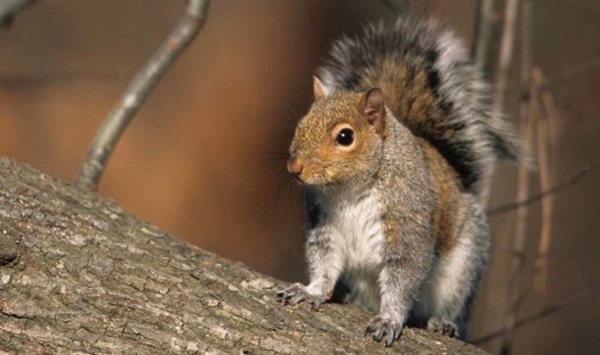
Squirrel Hunting Is Easy Until I Go Squirrel Hunting
A lot of hunters think squirrel hunting is easy, maybe even too easy, and I understand why. While P.T. Barnum may have considered the circus the Greatest Show on Earth, from 20 feet up in a deer stand, I’d argue the Squirrel Olympics have it beat. They chase each other up trees, jump from limb to limb, bark at things that apparently deserve to be barked at, and occasionally do their best rendition of the WWF in the canopy above our heads. Meanwhile, we’re sitting there wondering why we bothered bringing a deer rifle when we’ve seen 37 squirrels and exactly zero deer.

There’s a reason we see so many squirrels while deer hunting. Deer and squirrels share a lot of the same habitat, and many of the things we do to put ourselves around deer also put us around squirrels. We find food, cover and travel routes, pay attention to edges, then sit down, shut up and give the woods enough time to come back to life around us.
When we’re deer hunting, squirrels are entertainment. They’re a free episode of Mutual of Omaha’s Wild Kingdom while we wait for a buck. We watch them make impossible jumps and dig through the leaves, making enough noise to convince us a 200-pound buck is headed our way. Half the time we’re rooting for them, laughing at them or quietly cussing them for making us turn our heads for the 47th time that morning.
Then we come back specifically to hunt squirrels and the show gets canceled. The trees are empty, the leaves are quiet and the squirrel that spent three hours throwing acorn pieces at us during deer season has apparently entered the witness protection program. That’s when we remember that squirrel hunting and seeing squirrels while deer hunting are two very different things.
A One-Pound Animal That Could Probably Kick My Ass
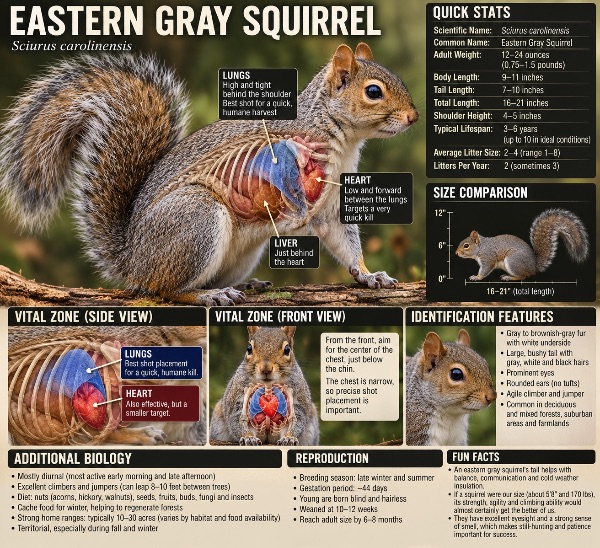
The eastern gray squirrel is so common that we probably don’t give it much thought, but anatomically it’s an impressive little animal. An adult is generally around 16 to 20 inches long, including the tail, and weighs somewhere around a pound to a pound and a half (you metric folks will just have to Google the conversions). Powerful hindquarters launch it between limbs, while long toes and sharp, curved claws grip bark. Its hind ankles can rotate enough to let it descend a tree headfirst, and that big bushy tail helps with balance, communication and insulation.
Meanwhile, some of us are at the age where getting out of the truck wrong earns us a trip to the emergency room, or at least the medicine cabinet.
Squirrels are rodents, so those front incisors never stop growing and are continually worn down by gnawing. Add large eyes with a broad field of view and excellent hearing that somehow includes our boot touching the only dry stick in an otherwise damp forest, and we begin to appreciate how well equipped they are.
If a squirrel were our size, I’m pretty confident it would royally kick our ass. There wouldn’t be a Rocky moment where we dug deep and fought back, either. Yes, I know Rocky is the squirrel in Rocky and Bullwinkle, but I mean the underdog boxer. Yo, Adrian.
Fortunately, squirrels are squirrel-sized, although we haven’t talked about fox squirrels yet. Compared to an eastern gray squirrel, a fox squirrel looks like somebody fed a gray squirrel protein powder, gave it a gym membership and told it to start bulking for winter. They’re basically swole gray squirrels. I’ve seen a few around here that probably couldn’t whip our ass, but I’d still walk the other way.
Let’s talk squirrel anatomy. The heart and lungs sit inside a very small chest behind the front legs, while the skull presents an even smaller target. Fur and that oversized tail can make the animal appear larger than the anatomy we’re actually trying to hit, and shot angle complicates things when a squirrel is clinging to a trunk or stretched across a limb. Black bears are similar in the sense that their puffy fur can fool us into thinking they’re bigger than they are.
Wow, gray squirrels and black bears in the same paragraph.
Anyway …
Find the Grocery Store
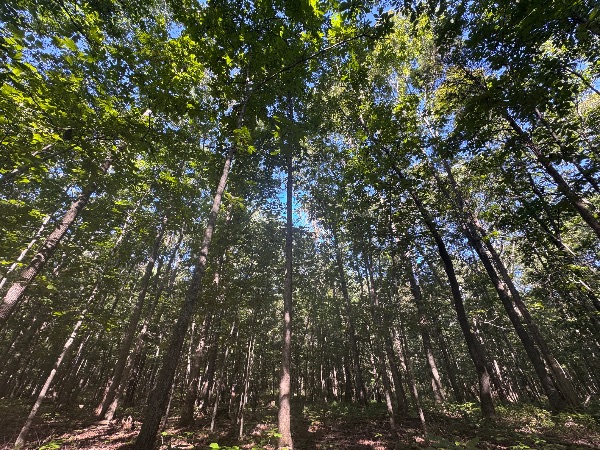
Mature hardwood timber provides squirrels with the two things they need most: food and a home. Oaks are the obvious starting point, but telling ourselves to “find the oaks” is about as useful as telling a deer hunter to “find the woods.”
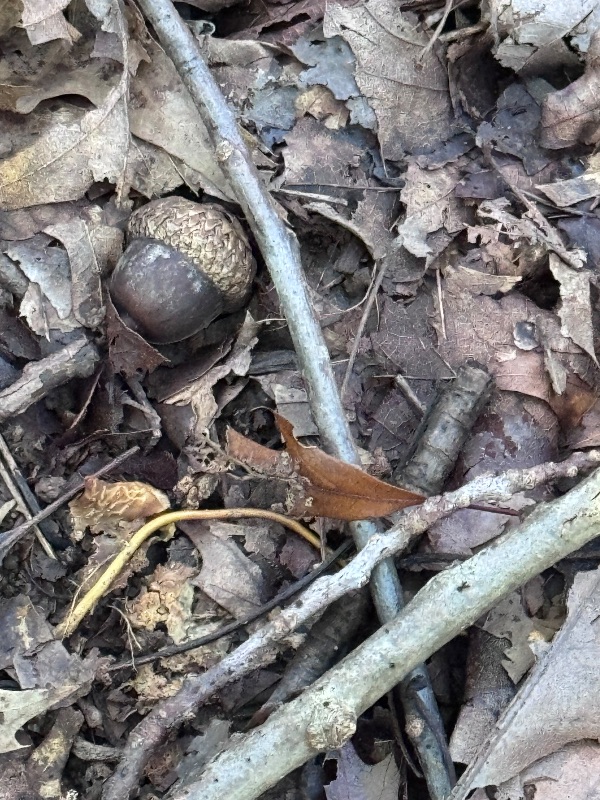
White oak acorns generally contain less tannin and tend to be more palatable, while red oak acorns contain more tannin but can remain available longer. Hickories can be squirrel magnets, and walnuts and beechnuts matter too. Squirrels also eat berries, seeds, buds, fungi, fruits and agricultural crops. Basically, if we’re trying to think like a squirrel and something is edible, the evaluation process doesn’t appear terribly complicated.
And you thought there wasn’t any woodsmanship to squirrel hunting.
Unlike your local Publix, Mother Nature’s grocery stores change. A spot covered in squirrels in September may seem dead in December because food disappears, crops get harvested and squirrels adjust.
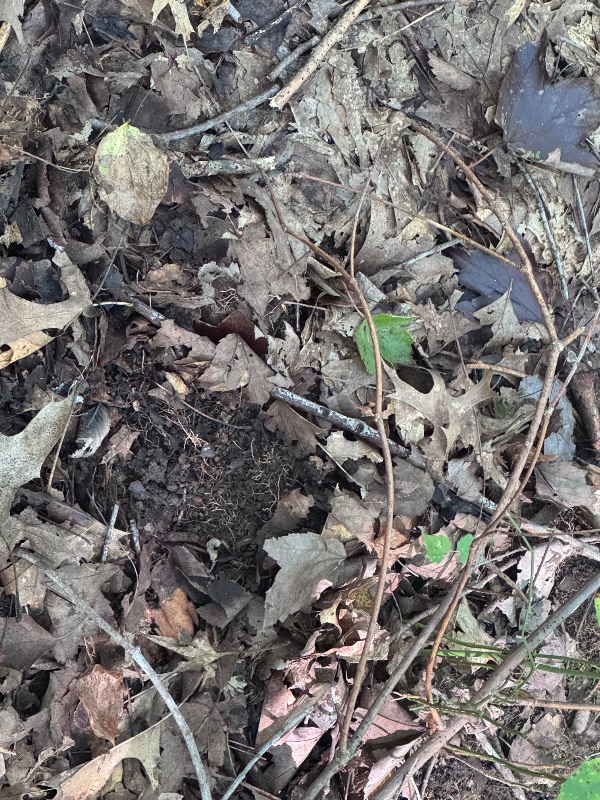
One thing that’s worked for me is finding good habitat and then sitting tight wherever we find feeding activity, regardless of whether we immediately see squirrels. We’re looking for acorn husks, ground that’s been dug up and, most importantly, whether there’s enough viable mast left to keep squirrels there. If there is, we sit tight.
I’m Basically in Their Basement
Once we know we’re in a good spot, we look around and, most importantly, we look up. Why? Squirrels live vertically. Us? We’re more horizontal. So we need to start looking at the woods differently.
Look for cavities, den trees and dreys, and study how tree crowns overlap. A squirrel escaping through the canopy usually isn’t inventing the route as it goes. It already knows which branch connects to the next tree, which limb gives it an escape route and which tree has a hole it can disappear into.
Once we start seeing those connections, the woods look different. We’re not wandering around hoping to bump into a random squirrel. We’re basically sitting in their basement trying to figure out where the stairs are.
Sit Down and Be Quiet
One deer-hunting skill transfers perfectly to squirrels, and that’s sitting still. When we walk into good habitat, everything knows we’re there. Instead of immediately marching through the woods looking for something, we need to sit down and give the woods 15 or 20 minutes to forget about us.
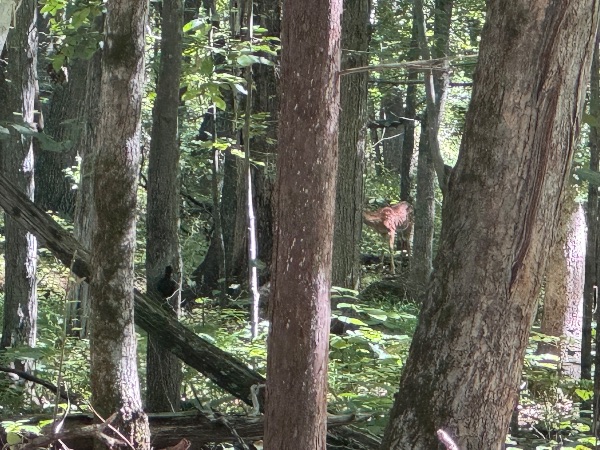
If we do, thats when the magic starts again. The birds start moving, the forest settles and eventually the squirrel that flattened itself against the opposite side of a tree decides the danger has passed and reveals itself.
That’s the point of starting our handgun series with habitat. First, we have to find them. Then we have to understand them well enough to get close.
Once we can do that, we can finally start talking about handguns.
More to come …
- Jay Pinsky