
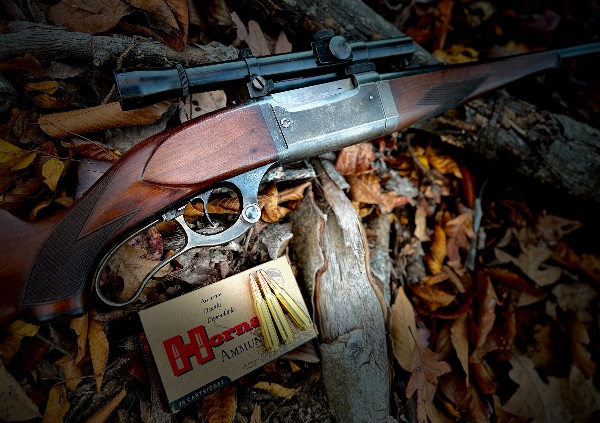
The most powerful thing a firearm triggers isn’t a cartridge.
It’s a memory.
We hunters spend an awful lot of time talking about rifles as though the numbers are what make them important. We’ll debate caliber, velocity, energy, barrel length, bullet weight, and group size with the conviction of constitutional scholars arguing before the Supreme Court. We’ll spend hundreds of dollars chasing another half-inch of accuracy, then miss a deer (mouflon) because our heart is pounding so hard we can hear it in our ears.
But carry the same rifle long enough and, eventually, none of those numbers matter nearly as much as we once believed.
Why? Because somewhere along the way, you start loading something besides cartridges into it. Something far more precious, and absolutely priceless.
You load your first deer. Your son’s first deer. The biggest buck you ever killed and the bigger one you never got a shot at. The elk you dreamed about for years, and the spike you remember more vividly because of who stood beside you when it happened. You load the hunt when everything went right and the one that still wakes you up every November because everything went wrong.
Those memories have a way of settling into a rifle without you ever realizing it. The almosts tend to linger the longest. So do the lasts.
The strange thing about lasts is that we rarely recognize them while they’re happening. We don’t know it’s the last opening morning we’ll hunt with our father. We don’t know it’s the last trip an old bird dog will make before age catches up with him. We don’t know it’s the last evening everyone in deer camp will gather around the same fire, laughing at stories that somehow get funnier every year.
If we knew, maybe we’d pay a little more attention.
Life rarely gives us that courtesy.
Years later, you’ll find yourself sitting against the same oak tree with the same rifle across your knees when a memory appears out of nowhere. You weren’t looking for it. You weren’t even thinking about it. It simply arrives - just like those big bucks do sometimes.
That’s one of the greatest gifts hunting gives us, time. Now, Im not talking about the three minutes between meetings while we scroll through our phones, or the drive home rehearsing tomorrow’s to-do list, or on the couch planted squarely in front of a TV.
No, Im talking about quality time. The kind that has become increasingly rare.
How so?
A deer stand is one of the few places left where there’s nowhere to be, nothing to accomplish, and no expectation that every minute must produce something measurable. You watch squirrels argue over acorns. You study the wind. Every limb falling or stick cracking convinces you a giant buck/bull/bear is slipping through the timber only to reveal that its nothing more than a two-pound fox squirrel crashes through the leaves with all the subtlety of a freight train.
Eventually, your mind begins to wander, and that’s when the magic happens and the rifle across your lap starts telling stories. Not literally, of course. But your eyes settle on the scratch in the stock, and you’re suddenly back in Colorado, or Idaho, or New Zealand. You notice the worn bluing near the receiver and remember years of carrying it one-handed through Virginia hardwoods. You run your thumb across the little gouge that once made you sick to your stomach because you’d damaged your favorite rifle when you dragged your feet through the woods empty-handed one night and fell face-first into Virginia's finest blackjack soil.
Funny how time changes things.
That scratch? It isn’t damage anymore. It’s proof you were there, and its every bit the trophy that 12-pointer you shot on the wall is - maybe more so.
Rifles are a lot like good marriages - the longer you stay committed to one, the better they get. Time is a talented gunsmith. It's what shapes an old rifle into more than just a firearm, and something closer to a scrapbook with pop.
If you’ve carried one rifle long enough, you’re no longer carrying just steel and wood. You’re carrying your father, or mother. Your grandfather. Your wife - or husband. A son or daughter. The hunting partner who always claimed he’d only tell one more story before bed. The friend whose number is still saved in your phone even though you know he’ll never answer another call. That’s an awful lot of weight for seven or eight pounds of walnut and steel. No matter, its a burden every hunter yearns to carry. No one has ever complained about packing out memories.
Don’t get me wrong. A rifle, your rifle, is still a tool, and it performs the task it was designed to do. It takes a life. There’s no reason to pretend otherwise. Hunting ends with death, and those of us who hunt owe the animal enough respect to acknowledge that plainly. The taking of life deserves honesty, gratitude, and humility.
That’s precisely why I’ve come to believe something else.
Taking a life might actually be the least important thing my rifles have ever done.
Think about it.
A rifle you’ve owned for thirty years may have spent only a few seconds of its entire existence pointed at an animal with your finger on the trigger. Yet you’ve carried it for thousands of hours. You’ve watched countless sunrises with it resting across your knees. You’ve walked untold miles through forests, fields, deserts, and mountains.
How many friends did you make because of that rifle? How many camps did you share? How many times did you hand it to someone you loved and quietly say, “Your turn”? How many phone calls were made because hunting gave you an excuse to reconnect with someone who mattered? How many conversations happened because two people sat in the woods with nowhere else they needed to be?
And how many times did that silence finally become quiet enough for you to hear yourself think?
That’s what our rifles really do.
They take us places we might never have gone. They introduce us to people we otherwise never would have met. They connect generations that would struggle to find common ground anywhere else. They teach patience to young hunters who have none and humility to older hunters who occasionally need reminding.
Most of all, they teach us that sometimes we can do everything right and still go home empty-handed.
There aren’t many better lessons for life than that.
Eventually, though, every hunter learns another lesson, one that’s much harder to accept.
There are only so many opening mornings.
When we’re twenty years old, hunting seasons feel endless. Another November is always coming. Another elk hunt. Another deer camp. Another chance to get it right.
Then one day you catch yourself counting differently.
Maybe you have 30 deer seasons left, or 20, or five. Some of us won't make the next one. Suddenly a cold November morning becomes more valuable than it used to be, and so does the person sitting quietly beside you.
Maybe that’s why older hunters seem less obsessed with filling a tag. They’ve already discovered the secret, that the kill was never the point, or even the best part of a hunt. The best part was dad waking you up at four-thirty in the morning while the coffee finished brewing. It was stopping at a gas station before daylight because terrible coffee somehow tastes better on opening morning. It was your child falling asleep in the stand because hunting was still a little too much waiting and not enough deer. It was dragging a buck much farther than anyone with common sense would have parked from the truck. It was missing cleanly, and then spending the next decade hearing about it at every campfire.
It was laughing, listening, and yes - crying. It was sitting beside someone you loved and realizing neither of you needed to say a single word. It was simply being there.
One day, if we’re fortunate, someone else will carry our rifle.
Maybe it’ll be a son or daughter. Maybe a grandson. Maybe a close friend who understands what that rifle meant long before it ever became theirs. They’ll notice the scratches and recognize a few of the stories behind them. Others will remain mysteries, little marks left behind by a life they didn’t get to witness firsthand.
Maybe they’ll carry it into the woods on a cold November morning. Maybe they’ll settle against an old tree with that familiar piece of walnut and steel resting across their knees. And when the woods grow quiet enough, perhaps they’ll think about us.
That’s when they’ll understand what took us a lifetime to learn. We spend our lives believing we’re carrying these rifles. We’re not. They’re carrying us.
Our firsts and our lasts. Our fathers and our children. Our victories, our failures, our friends, our mistakes, and the younger versions of ourselves that still live somewhere inside those memories. Over a lifetime, all of it becomes embedded in the same rifle until it transforms from something we own into something that quietly records the life we’ve lived.
Every once in a while we pull the trigger, the rifle kicks, the woods echo, and an animal dies. That’s hunting.
But recoil fades. The echo disappears.
The memories, they never go away.
Maybe that’s the greatest irony of the hunting rifle. For a tool designed to take a life, it spends remarkably little time doing it. Most of its existence is spent helping us live one.
Long after we’ve fired our last shot, somewhere in those scratches, worn edges, and stories, a little piece of us will still be waiting for the next hunter to pick it up.
Because in the end, the most powerful thing a rifle ever triggers was never a cartridge.
It was always a memory.
- Jay Pinsky