Every successful cartridge begins with a question.
For Hornady’s ARC family, the question was simple: What if the AR-15 had never been designed around yesterday’s cartridges?
Jayden Quinlan, Hornady’s Senior Ballistician, answered it with the 6mm ARC.
Trained by legendary Hornady engineer Dave Emery, Quinlan represents the next generation of ballistic designers carrying Hornady’s tradition of purposeful innovation forward. As the lead engineer on the 6mm ARC, he helped develop the cartridge that became the foundation of the entire ARC family. The .22 ARC and .338 ARC would eventually join it, but the 6mm ARC proved the concept and demonstrated that thoughtful engineering could still redefine what shooters expected from America’s most popular rifle platform.
Spend a few minutes talking with Quinlan and one thing becomes obvious. He isn’t interested in chasing trends or creating cartridges simply because the market will buy them. He thinks in terms of systems. Every decision, bullet design, chamber geometry, case capacity, twist rate, pressure curve, has to support the others. It’s an approach that has become part of Hornady’s DNA and one that explains why the ARC family feels less like three separate cartridges and more like one engineering philosophy expressed in different calibers.
The ARC de' Triumph, if you will.
Sorry guys ...
Start With the Mission
Ask Quinlan where the ARC family began, and he doesn’t start with velocity figures or ballistic charts. Instead, he points to another cartridge that changed the industry.
“The origin of the ARC cartridge family really started with a similar vision as the 6.5 Creedmoor. We wanted to use the best chamber design for modern bullets, and the Grendel parent case really was the perfect place to start over something like the 223 Rem (.378” case head) or the 6.8 SPC (.422” case head).”
That answer says a lot about how Hornady approaches cartridge development. The goal wasn’t to introduce something new for its own sake. The goal was to solve a problem. Bullet technology had advanced dramatically over the past two decades, but many cartridges designed for the AR-15 platform were still asking those sleek, high-BC bullets to fit within design parameters established long before those projectiles existed. Rather than compromise the bullet, Hornady chose to build the cartridge around it.
It’s a subtle difference, but it’s one that changed everything.
Efficiency Beats Raw Speed
Shooters have spent generations chasing velocity. More speed meant flatter trajectories, greater energy, and better performance, or at least that’s what conventional wisdom suggested.
During the development of the 6mm ARC, Quinlan discovered something different.
“While the 338 ARC was the first to be developed, the 6mm version was the first to market. During the 6mm ARC design, a big eye opener for us was that if you use an incredibly efficient bullet design, we really didn’t have to focus on high velocity to get the long-range performance we were after.”
That realization represents one of the biggest shifts in modern cartridge design. Today, smarter engineering often beats brute force. An efficient bullet that maintains velocity, resists wind drift, and carries energy farther downrange can outperform faster projectiles that sacrifice those advantages shortly after leaving the muzzle. Instead of asking, “How fast can we make it?” Quinlan’s team asked, “How well can we make it perform?”
Those aren’t always the same question.
Everything Has to Work Together
Ask a room full of shooters what makes a cartridge successful, and you’ll hear plenty of opinions. Some swear it’s all about the bullet. Others insist powder selection is everything. Still others focus on brass quality or chamber dimensions.
Quinlan sees it differently.
“It's hard to narrow it down to one thing. It all has to balance. With that in mind, I think the single thing that mattered most IS balance. Bullets, brass, powder, twist rates, and chamber geometry.”
That single word, balance, may be the best description of Hornady’s engineering philosophy.
No single component carries the system. A premium bullet can’t overcome poor chamber geometry. More powder won’t fix an inefficient design. Faster twist rates alone don’t guarantee better performance. Everything has to work together, and that’s exactly how the ARC family was engineered. Every decision supports another decision until the entire cartridge functions as a cohesive system instead of a collection of parts.
Purpose Before Popularity
Every new cartridge faces the same criticism.
“Do we really need another one?”
Quinlan understands why people ask.
“That's a valid argument, as many cartridges can do a lot of different jobs. The ARC cartridge really excels in being purposefully done with clear intent. For example, you can put long ogive, heavy bullets into something like, say, a 243 Winchester. But at some point, that 243 Win will need a custom barrel and custom twist rate to use those bullets. Whereas the 6mm ARC was designed with those bullets specifically in mind. Not to mention the ARC line fits into the versatile AR-15 platform and offers top-end performance for that system.”
His answer isn’t about replacing classics. It’s about designing without compromise.
The .243 Winchester remains one of the finest hunting cartridges ever developed, but it wasn’t engineered around today’s longest, highest-ballistic-coefficient bullets. The 6mm ARC was. That’s the difference. One reflects the best thinking of its era. The other reflects the best of our thinking.
Success Isn’t Launch Day
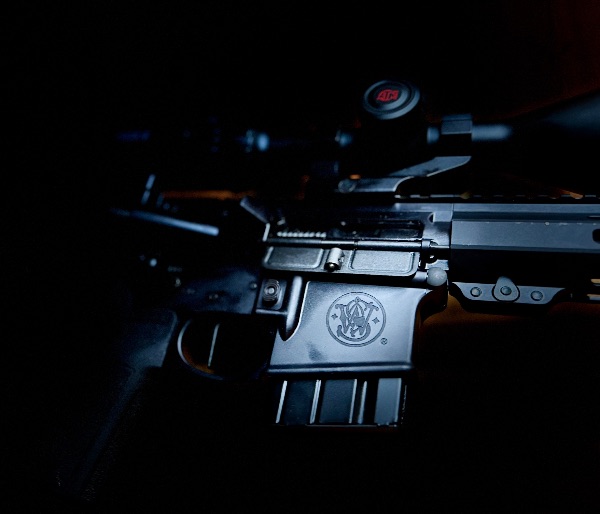
The author's Smith & Wesson Volunteer X 20” in 6mm ARC. A rifle built to showcase exactly what the cartridge was designed to do, maximize the AR-15’s potential with outstanding accuracy, efficient ballistics, and impressive downrange performance. The 6mm ARC proves that smart engineering can outperform brute force. If only it could make feral hogs appear on demand ....
For most companies, success is measured by sales during the first year.
Engineers think differently.
For Quinlan, success is measured years later, when shooters are still buying ammunition, rifle manufacturers continue chambering firearms, and accessory companies invest in magazines, components, and support equipment because the cartridge has become part of the marketplace.
“Largely, I think a lot of success is in the future! The 6mm ARC has established itself for both commercial and Mil/LE customers. Likewise, the 22 ARC and 338 ARC have found their home as well. The firearms are available everywhere, ammo is available, and the auxiliary equipment, like magazines, are getting better every day.”
Perhaps the greatest compliment, however, comes from an entirely different group.
“To date, no - they haven’t inspired any new ballistic developments for other cartridges. That said, there has been significant wildcatting using the ARC cartridges, which is always great to see.”
Wildcatters have always been the firearms industry’s unofficial research and development department. When they adopt a case design, it’s because they see possibilities that extend beyond the original blueprint. For an engineer, that’s about as meaningful an endorsement as you can receive.
One Cartridge Above the Rest?
When asked which member of the ARC family has most benefited its caliber, Quinlan smiles before answering.
“Admittedly, I think they all have advanced their respective caliber. If I had to pick only one, I'd personally say the 6mm ARC and largely because of its versatility. This cartridge is equally at home shooting prairie dogs out in the west or hunting black bears in the timber of the northeast.”
That versatility explains why the 6mm ARC became the cartridge that launched an entire family. It isn’t defined by a single discipline; it’s equally at home calling coyotes, chasing competition trophies, or filling a deer tag. Few cartridges can honestly claim that kind of flexibility.
It’s worth noting that Quinlan never talked about building the fastest cartridge or the most revolutionary one. He kept returning to the same idea: purpose. Every engineering decision began with identifying a mission and refusing to compromise until the cartridge fulfilled it.
Perhaps the greatest compliment to the ARC family is that it no longer has to prove itself; the shooters using it do that every day.
- Jay Pinsky, Editor, The Hunting Wire & The Archery Wire