
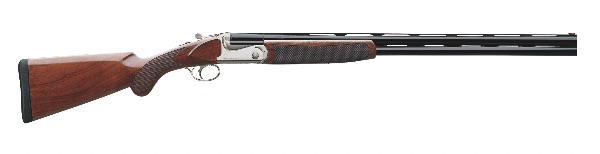
Lots of time sitting at the base of a tree for turkey season has led me to ponder a lot of things. Some I should, and other things I shouldn't.
Under the should category, maybe, is: "Is a turkey actually an upland bird?"
Now hear me out. Biologically, scientifically, and according to some wildlife agencies in America, the answer is yes. The wild turkey is classified as an upland game bird.
Cue the brush pants, gobs of blaze orange, black Labs, and the over-and-under shotgun. That's not the best way to hunt turkeys, though. I know, I've tried.
Now hold on. Turkeys aren't upland birds simply because you can't hunt turkeys with dogs.
Um ... guess what?
Turkey hunting with dogs is an old-school fall hunting tradition where the dog’s job is to intentionally scatter a flock of turkeys in every direction. Once the birds are separated, they naturally begin calling to regroup, and the hunter sits down and imitates a lost turkey to call them back in.
Unlike bird dogs used for quail or pheasants, turkey dogs are meant to create chaos on purpose, because turkeys hate being separated from the flock. It’s part strategy, part teamwork, and part controlled woods mayhem. And after watching a turkey explode out of the leaves while a dog barrels through the timber, it starts making a lot more sense why some folks say turkeys may technically be upland birds, but they’ve got the attitude of organized crime.
But I think most folks think spring when they think of turkey hunting. So, let's refocus there.
Spring turkey hunting is basically psychological warfare against an animal dumb enough to drown itself looking up in the rain but smart enough to completely ruin your entire spring season.
You sit against trees talking to birds, and to yourself.
You wake up at 3:30 a.m. voluntarily. Your wife, not so much.
You hear one gobble and suddenly start making financial decisions like: “I probably do need another turkey vest, or (shoutout to my waterfowlers) I need more decoys.”
That’s not upland behavior. Or is it?
Technically speaking, turkeys absolutely fit the definition of an upland bird. They’re ground-dwelling birds associated with forests and upland habitats. They nest on the ground, spend most of their lives walking around like feathery mob bosses, and wildlife agencies manage them alongside other upland game birds.
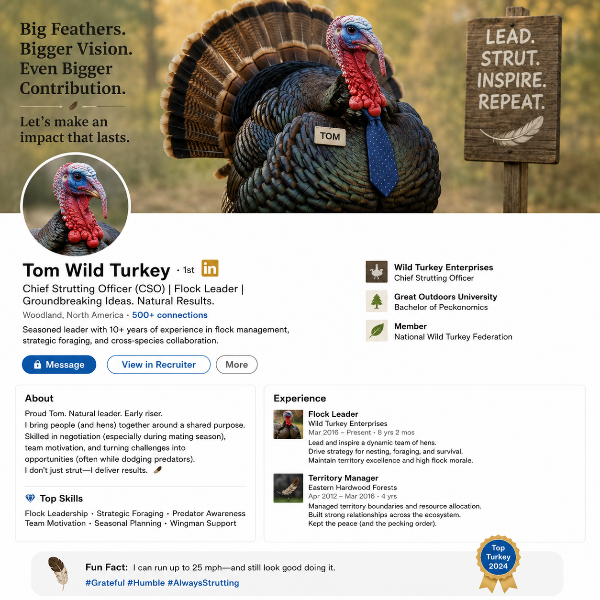
The Maine Department of Inland Fisheries and Wildlife even calls the wild turkey “North America’s largest upland game bird,” which sounds exactly like something a turkey would put on its LinkedIn profile.
Taxonomically, turkeys belong to the same general bird family grouping as pheasants and grouse. Simply put, the turkey is the giant, mouthy, weird cousin at the upland bird family reunion. Maybe it's my new spirit animal?
Taxonomically, the Wild Turkey belongs to:
- Kingdom: Animalia
- Phylum: Chordata
- Class: Aves
- Order: Galliformes
- Family: Phasianidae
- Genus: Meleagris
- Species: Meleagris gallopavo
The order Galliformes includes many of the birds hunters traditionally think of as upland game birds:
- Pheasants
- Grouse
- Quail
- Partridge
- Junglefowl
And the family Phasianidae includes:
- Ring-necked Pheasant
- Wild Turkey
- Gray Partridge
- Chukar Partridge
So, biologically, turkeys absolutely sit within the broader upland bird family tree, even if culturally, turkey hunters often behave as if they’re a separate species. For the record, many states classify the turkey as a big game species.
It's really a pointless debate. Upland? Not upland? Who cares? Turkeys are a hoot - well, gobble, to hunt and so are pheasants, quail, and chukars.
Personally, I think turkey hunters and upland hunters have a lot more in common than we realize. Both groups become emotionally unstable around sunrise. Both spend absurd amounts of money convincing themselves they’re “minimalists.” And both care deeply about habitat, conservation, and the preservation of hunting traditions. The divider - one group sees blaze orange as Kryptonite, and the other as an absolute requirement (and should be).
Also, both groups own at least one shotgun they absolutely do not need but will defend as if it were family honor.
Which brings me to my last gobbler, and why I wrote this story.
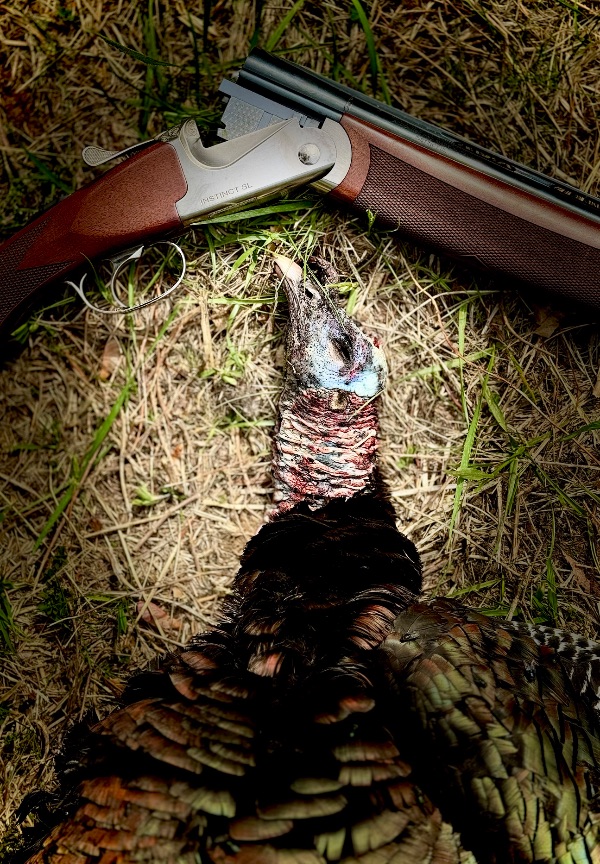
I killed my last tom with my Franchi Instinct SL 16-gauge, which is basically the bamboo fly rod of shotguns; upland hunters get misty-eyed just saying "sixteen." Sure, 16-gauge ammo is hard to find. Ammo makers don’t produce a lot of 16-gauge ammo, but it’s not because it’s not popular. It’s because 16-gauge hunters are just better shots and don’t need as much. Supply and demand, and all.
How swanky is Franchi's Instinct SL line of scatter guns? I actually bought my Franchi after reviewing it, which is about as common for a gun writer as genuinely enjoying your in-laws.
My gun carries like a dream. It's light, smooth, and way better than hauling around a turkey gun that weighs as much as a boat anchor and looks ready to call in airstrikes. I tend to think modern turkey guns are a bit techno these days . Half of them look less like shotguns and more like something a suburban dad would use to defend Earth from aliens in a low-budget sci-fi movie.
For me, there’s something deeply satisfying about killing a gobbler with a simple 16-gauge double gun. It feels connected to an older kind of hunting, before we all decided every problem in the outdoors required another accessory rail.
Regardless of whether you take a proper upland gun after turkeys or opt for something more tech-savvy, I encourage you to hunt "upland" turkeys or pheasants or quail, as much as you can.
“No hour of life is wasted that is spent in the uplands.” - Winston Churchill
Jay Pinsky