Lipsey’s: The Driving Force Behind Unique Firearms Innovation
Not every firearm innovation starts at a factory. Some start in a warehouse. Or, more accurately, in the mind of someone who understands the industry well enough to spot what’s missing.
That’s where a company like Lipsey’s, headquartered in Baton Rouge, La., comes in with a line of products they call "Lipsey's Exclusives".
Lipsey’s isn’t a manufacturer. They don’t forge steel, cut rifling, run CNC machines, or stamp rollmarks onto receivers. But make no mistake, they build guns. They build with ideas, not tools and in today’s firearms industry, that can be even more powerful.
Where Products Actually Begin
“We carry about 120 manufacturers,” said Jason Cloessner, Senior Vice President of Product Development at Lipsey’s. “But what we really do is look for what’s not there.”
That focus on unmet needs sets Lipsey’s apart. Most distributors just move inventory, but Lipsey’s creates it.
The process starts with a simple question: What should exist that doesn’t?
Sometimes that means filling a gap in a catalog. Other times, it’s about improving a proven platform, adding better sights, better ergonomics, a different cartridge, a shorter barrel, or a smarter setup. Then Lipsey’s goes to the manufacturer. If the manufacturer agrees, Lipsey’s places the order. The guns are built, and a new product enters the market.
But there’s a catch. You can only get it from Lipsey’s.
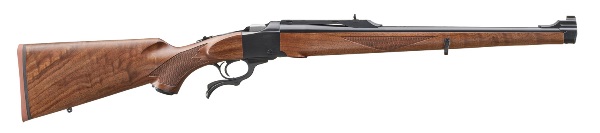
The 9.3×62mm Mauser was created by Otto Bock in 1905. It has since earned a reputation as a highly-capable any-game cartridge respected all over the world.
“We wanted a medium bore rifle in a short, lightweight package,” Cloessner said. “Something powerful, but still practical. Something you could carry all day.”
It was a real challenge.
The International stock requires a slim barrel profile. A larger bore typically means a heavier barrel. That changes the balance, the geometry, and ultimately the entire feel of the rifle.
So Lipsey’s encouraged Ruger to find a solution, and they did.
The result is a six-and-a-half-pound rifle that’s powerful enough for dangerous game, has classic styling, and offers modern practicality. It’s just as suited for elk country, southern hog woods, or even a trip to Africa. It looks traditional, but it exists because someone was willing to rethink what tradition means.
Why Exclusivity? The Reason Behind Lipsey’s Special Offerings
Exclusivity is at the heart of their approach.
When Lipsey orders a special run, those guns aren’t added to the manufacturer’s catalog. They aren’t left waiting to be found. They arrive with a feeling of urgency.
“I would say it absolutely makes them more collectible,” Cloessner said. “When it’s not in the catalog, people know they may not get another shot at it.”
Manufacturers have learned that adding a Lipsey’s exclusive to their regular lineup can actually hurt sales. When the demand disappears, so does the momentum. Scarcity doesn’t just create interest; it prompts customers to buy sooner, usually leading to faster sellouts and a rise in demand for future exclusives. And action drives the market.
A Different Kind of Impact
Lipsey’s doesn’t just create products; it helps shape the industry. Every exclusive becomes a conversation, and in some households, a negotiation.
With 60 in-house sales reps calling dealers in every state, each new release gets noticed. Even if a dealer doesn’t buy that particular gun, they start paying attention to the brand again. Dealers check their inventory, place orders, and momentum grows.
But the bigger impact might be recognizing trends early.
Long before threaded barrels were standard, Lipsey’s was requesting them. Before red dot sights became common on handguns, they were adding optics to pistols.
Why? Because they anticipated it.
“We try to chase trends, not fads,” Cloessner said.
Whats the difference? A trend reshapes the market. A fad burns out, and Lipsey’s has built its business on knowing the difference.
The Return to Tradition: Today’s Market Direction
The market is shifting.
“I think we’re seeing a trend toward more traditional guns,” Cloessner said.
After years of AR platforms and striker-fired pistols dominating the market, shooters want something different, something with character that takes a bit more skill like lever-actions, revolvers, etc. Simply put, old school is cool again.
This reminds me of advice I got from a good friend, Lee Westervelt, once, when I got tired of shooting a 25-06 for years. I pondered selling it, and he said, "Don't. Just put it in the back of your gun safe and forget about it for a while. One day, you'll rediscover it, and it will be the same rifle and cartridge you loved all over again."
He was right, and to this day, I often rotate rifles based on Lee’s advice. I'd be a much better hunter and shot if I had listened to his other advice and been a one-gun man, just sticking with that 25-06, because I haven't hunted anything, anywhere where it wouldn't have worked.
Sigh. Back to Lipsey's.
Most of us in the gun industry know that none of this is guaranteed. Every project takes commitment, sometimes hundreds of units, sometimes even more. If it doesn’t sell, Lipsey’s takes the risk - all of it.
“We never want to do something and then blow it out at a discount,” Cloessner said. “That hurts the customer who believed in it early.”
More Than a Distributor
You don’t have to run a factory floor to be a maker in the gun world. Lipsey’s might not mill steel or engrave receivers, but their fingerprints are all over some of the most interesting rifles and pistols to hit the market in the last decade.
By spotting gaps, envisioning what shooters actually want, and working directly with manufacturers to bring those ideas to life, Lipsey’s helps shape what ends up in our gun safes.
In a real sense, they make firearms by making them possible, proving that innovation isn’t limited to the shop floor, but starts with asking, “What should exist that doesn’t?”
The Hunting Wire’s “Maker Series” takes you behind the scenes with the people who create the gear hunters and shooters rely on. Instead of talking about new gadgets, we focus on - and celebrate - the machinists, engineers, designers, builders, and the decision-makers in our industry. Want to share your Maker Series story? Reach out!
Jay Pinsky, Editor, The Hunting Wire & The Archery Wire