

I’ve seen a shift in the world of lever guns. It’s about more than holding on to old memories; it’s about our duty to take care of something important - America’s rifle.
The modern lever-action revival did not arrive because one company declared it so. It came because shooters rediscovered what these rifles have always offered: balance, reliability, immediacy, and a connection to the American hunting culture.
The question now is not who owns the revival, but who is willing to lead it responsibly.
That distinction matters, and I have an opinion.
As Marlin confidently settles into its new era, the company's posture reflects an understanding that leadership in a heritage category is not about dominance; it is about elevation.
To Marlin, that responsibility is clear.
Over the last few years, Marlin has introduced several new lever-action models that have helped fuel this revival each bringing updated features such as factory-installed optics rails, threaded barrels, new calibers, and improved tolerances. These models mark Marlin's commitment to blending modern performance with classic design, appealing to both longtime enthusiasts and a new generation of shooters.
When you pick up a new Marlin, it's obvious they care. First because Marlins are well made today. Second, because they'll be even better tomorrow . While a lot of good and even great companies make lever guns, Marlin is lever guns. It’s personal for them. I see it in the field and hear about it from our Hunting Wire readers.
I understand personal. And, Marlin's product manager, Eric Lundgren, does too. Early in the Lever-Gun Chronicles Series, Eric Lundgren put a 1894 Trapper, chambered in 44 Magnum, in my hands and waited. He knew what would happen next.
For most of last year, I thought the Browning Model 71 would always be my favorite lever gun. But as 2025 drew to a close, I realize my heart really belongs to something else: that smart, snappy, proven Marlin Trapper. It was with me in the canyons of Arizona when I took a mountain lion with it, and it quickly became the gun I trust the most. When it’s time to protect my family or head out hunting, I reach for the Trapper. That’s the highest praise I can give any gun.

Good companies don't play follow the leader. They are the leaders. And, sure enough, Marlin does not simply follow trends; it sets them, leading by example and inspiring the industry to reach higher.
I think it's fair to suggest that when a gun company builds a lever gun these days they measure it against a Marlin.
Today, Marlin stands as a standard-bearer, making what many consider to be the finest production lever-action rifles in the world.
This pursuit of perfection is not just about building great rifles; it is about honoring heritage, advancing innovation, and inviting more people into the lever-gun tradition.
Lundgren's words affirm Marlin's understanding and commitment to these ideals.
“It means taking responsibility for elevating the entire category while showing respect for the many makers and histories that built it," said Lundgren. "Marlin’s role is to be a visible advocate, invest in quality, promote responsible ownership, and create product and marketing touchpoints that grow interest.”
That mindset shows up most clearly in how today's rifles balance legacy with progress. Lever guns do not survive by freezing time. They survive by evolving carefully, without losing their soul. As Lundgren explained, that balance starts with respecting what makes a Marlin feel like a Marlin.
“By keeping signature Marlin cues (iconic lines, handling, balance, and familiar ergonomics) while thoughtfully adopting best practices from the wider family, modern metallurgy, improved actions, and features popularized by other lever-gun makers. The result is rifles that read as unmistakably Marlin in silhouette and feel, but that also reflect the technical and aesthetic progress the entire lever-gun community has contributed.”
This is not imitation. It is participation. And it is paired with a belief that the category grows strongest when manufacturers push one another to be better.
In Lundgren's view, collaboration does not necessarily entail coordination.
“The best way to strengthen the category is for each manufacturer to innovate and make quality products for a reasonable price" said Lundgren. "That in turn will push its competitors to do the same.”
Nowhere is that philosophy more visible than in how modern features are applied. The lever gun does not need to look tactical to be functional. It requires restraint and intent. Elegance isn't a word you often see paired with tactical, but Marlin did just that as it implemented a myriad of advancements to their lever gun line with a high degree of professionalism in form, function, and practicality.
“By applying modern features with restraint and purpose, such as optics rails designed to be low-profile and matched to the receiver lines, threaded barrels with discreet thread protectors, or cap designs that don’t change the muzzle silhouette, and weather-resistant finishes that mimic traditional tones," said Lundgren. "The modern additions preserve the rifle’s proportions and tactile cues so the product still reads classic Marlin at a glance.”
That restraint matters because the customer has changed, but has not abandoned tradition.
“Today’s buyer includes both the traditional hunter/enthusiast and a newer, younger crowd that values versatility, optics, and lifestyle use," said Lundgren. "Marlin adapts by offering models and options that bridge those audiences with factory optics-ready platforms, modern calibers, and threaded muzzles for suppressors, better triggers, improved accuracy, and messaging that honors tradition while highlighting practical modern uses (accuracy, reliability, ease of use).”
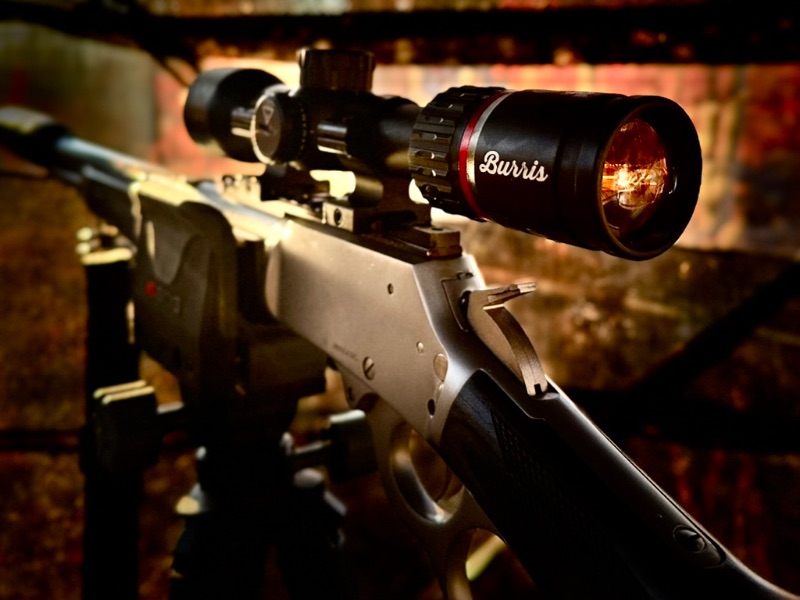
In practical terms, that means redefining what a "working rifle" looks like in 2025, not as a marketing phrase but as a field reality.
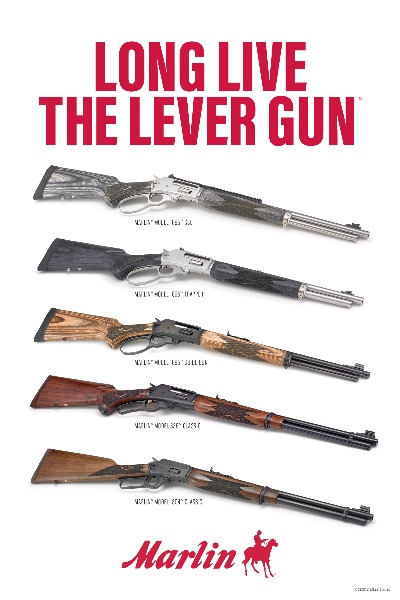
“A modern working rifle combines robust reliability, practical ergonomics, accuracy with modern ammunition, accessory readiness (mounting options, muzzle attachments), and low maintenance finishes. Current Marlin models like the SBL, Classic, and Trapper Series meet this standard by blending proven actions with upgraded tolerances, factory-ready optics/rail options, and serviceable finishes, giving hunters and outdoorsmen tools that work in real conditions, day in and day out,” said Lundgren.
But a product alone does not sustain a category. Culture does. Ethics do. Conservation does, and Marlin gets it.
"Through storytelling tied to conservation outcomes, sponsorship of ethical-hunting education and youth programs, partnerships with credible conservation organizations, and clear owner education on safe storage and responsible use," said Lundgren. "When makers openly promote stewardship as part of their brand ethos, lever guns are positioned not just as tools but as instruments of sustainable, tradition-based outdoor ethics.”
Trust, too, is built the old-fashioned way, through decisions customers can see and feel. Lundgren points to manufacturing choices as proof points.
“Those decisions are tangible proof-points: customers can see and feel improved fit-and-finish, consistent accuracy, and durable components. ‘Made in America’ and forged components tell a reliability story that reduces perceived risk. Buyers trust that their rifle will last, be serviceable, and retain value. That trust radiates beyond Marlin and raises expectations for the whole lever-gun segment.”
That rising expectation is exactly what healthy competition should create. As Lundgren sees it, competition strengthens everyone.
“Competition drives incremental improvements in design, manufacturing quality, and customer experience. When brands push one another on reliability, feature sets, or user support, consumers benefit from better products. Healthy competition also creates benchmarks that raise overall category credibility.”
Looking ahead, the lever gun's future is not about returning to the past; it is about widening the circle. Lundgren expects continued growth, provided the industry works together where it matters most.
“Expect steady growth driven by diversification such as new calibers and modern cartridge options, crossover buyers, and lifestyle positioning. Collaboration should focus on standards, safety education, and sharing materials and R&D to lower barriers to entry and increase scale awareness. Collective efforts will accelerate market expansion while protecting the heritage that makes lever guns compelling.”
The lever gun doesn’t need saving; it just needs people like us to care for it and keep it going. That’s been the heart of the Lever-Gun Chronicles Series here at The Hunting Wire: sharing stories, lessons, and the responsibility that comes with loving these rifles. As an editor, I think it’s our job to help these rifles last for the next generation, and I hope these chronicles have done their part to inspire that stewardship.
And as Lundgren makes clear, leadership in this space is not about ownership; it is about responsibility.
Jay Pinsky