
  |
Drawing from three decades on the water, this fishing guide imparts some of his hard-won wisdom
MUSKEGON, Mich. (December 5, 2025) – In the world of freshwater angling there are people who become focused on a species or a given style of fishing. There are walleye guys, bass guys, muskie guys, panfish guys, and don’t forget the carp guys. And, of course, each category has gals too!
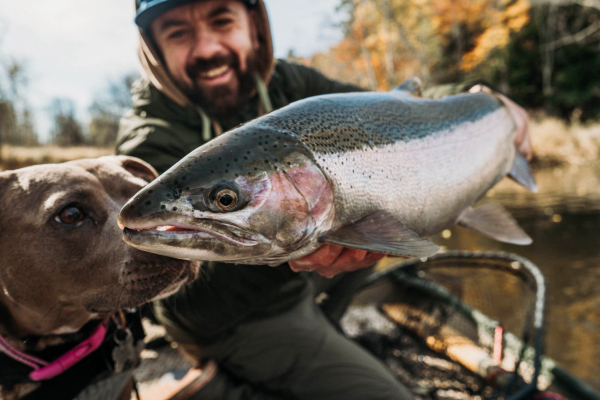
But perhaps no other fish draws anglers into the realm of obsession as the mighty steelhead. These migratory, outsized rainbow trout can drive folks to a point that transcends what the everyday angler can even comprehend.
Depending on your geography, you can pursue steelhead for most of the year, but late fall into winter is the pinnacle period. Sometimes, the best fishing opportunities are associated with brutal cold and snowy conditions, summoning the ate-up, borderline derelict anglers out into the stormy gloom of winter for one tug or float drop.
I’ve been guiding steelhead anglers for nearly 30 years – and I have seen things... I’ve watched fish pushing 25lbs shatter thousand-dollar rods like match sticks, failed reel drags seize, and perfectly normal, productive members of society say to hell with the real world, steelhead are my focus now.
It's been a fun ride, too, and like most guides, I sometimes take all the knowledge for granted. So, here’s a list of things you may or may not be cognizant of, but if you want to chase the mighty chrome bullets of winter, give them consideration...
|

|
Clothing: If you fish where winter weather is a reality, you’ll need proven, up to the challenge gear. This includes legit baselayers, socks, midlayers, and outerwear that is non-binding with some stretch, breathable, waterproof, with non-bulky insulation. If you fish from a boat, bibs and long jackets are perfect, but wading anglers need breathable waders built for the worst with heavy insulation underneath. Indeed, heavy neoprene waders have been popular for decades, but they are bulky and uncomfortable and trap perspiration, which ultimately chills the wearer. If you don’t pay extra attention to these basic winter steelhead fishing needs you will be miserable – end of story. Make the proper investments and quit pretending you can handle it with summer or fall gear…you, in fact, cannot. Down below I’ve shared my ultimate getup for wintertime steelies. Bonus Tip: Do not pack-on extra socks so you can barely squeeze= into the wader boots. Air (and blood) circulation is vital to maintain sufficient foot warmth. Wear better insulated socks and be sure you can wiggle your toes. Spawning Activity: Non-spawning fish will immediately focus on the “egg hatch” created by spawning fish such as salmon (fall) and steelhead (winter/spring). This is a steadfast rule you can capitalize on. When other anglers are busy “flossing” spawners off the gravel beds, fish the drops and “egg dumps” immediately downstream and you’ll find the feasting fish. This happens in the fall and winter when salmon species are actively spawning or post spawn when dead salmon litter the rivers and eggs are tumbling about. If you can find salmon, brown trout, or early steelhead spawning activity on beds, you will often find steelhead near that polished gravel eating dislodged eggs and aquatic insects. This includes slightly deeper “dark water” adjacent or immediately downstream. Whether you fish real eggs, yarn or beads, if there is a lot of spawning activity you can hook a steelhead in a mud puddle in the parking lot at the boat ramp. Water temps are critical this time of year. Steelhead generally spawn when the water is above 40-ish Fahrenheit. Yes, I’ve seen steelhead do it in 38-degree water, but those are super “ripe” summer-runs that had been in a holding pattern for months. I’ve also seen steelhead pull it off in much warmer water, but the magic numbers are the 40’s and low 50’s. Why is this important? Because prespawn and dropback or kelt (spawned-out) steelhead will hit the egg buffet. Note, when water drops below 38 Fahrenheit or so, migration and spawning activity will cease. In large rivers this is important because your favorite stretch may have hit the bad cycle and ended up with very few if any fish, while only a few miles away in another stretch there are hordes of them. Keep looking! Equipment: Except for fish exhausted from long migrations, fall/winter steelhead are one of the hardest fighting, chippiest fish you’ll encounter in North American waters. They rip drags wide open and jump into logs on the bank and pile into boulders like an Indy Car hitting the short chute wall at Indianapolis. Utter chaos and calamity, and the aftermath is often broken stuff, including terminal tackle, rods and even reels, and of course fishing line. I cannot stress this enough…use the very best gear and be sure it is in perfect repair. Check knots, sharpen hooks, look for scuffs on the line and do it chronically! Use micro-swivels with hi-breaking strength – I test them by breaking them. Drags should be smooth and capable of serious heating and stress. I once watched a cheap spinning reel start smoking under extreme steelhead duress and eventually melt – true story. Whether it’s conventional tackle, center pin, or fly gear…your stuff must be ready for a NASA mission to Planet Steelhead. Make the investment and take the time to coddle gear because it will absolutely pay off in the end. |
|

|
The Issue of Ice: Anyone who has fished in freezing conditions has experienced the irritation of frozen guides and reels. There are all kinds of hacks when it comes to ice, but in the end, it’s unavoidable. Options include applying cooking spray such as PAM to the guides, bees wax based lip balm, or Stanley’s Ice Off paste. I have used all of them and also like to wipe the rod blank and guides down with Rain-X. They even have pre-soaked wipes available. Honestly, the good old extended rod dip in the water melts pesky build-up as well. Reels tend to hold up better, but it can be hard on them. Try to keep them dry and avoid dipping them in the water. Fly reels with high-tolerances and cork drags designed for saltwater applications are poorly suited for winter fishing. Reels with sloppier actions and loose tolerances with stainless/Delrin drags can chew through frozen actions and guts much easier than something that costs two or three times as much, without damaging the reel. Slow Down: Fish with purpose and avoid faster sections of river unless you can get your rig allthe way to the bottom and bounce a drift underneath the ripping current up top. This is a common way to fish for steelhead, and trout in general, in fast water, but when fishing for winter steelhead, the water can be akin to liquid ice. During winter, steelhead are typically located in moderate to slow currents near heavy cover such as timber and boulders, in depths that afford some solitude and security. It’s going to be a long winter’s rest until water temps come back up into the spawning zone. Whether you are fishing bait, beads or nymphs under a float, yarn on a bottom-bouncing drift rig, swinging streamers with sink tips, or back trolling plugs…be sure your presentation spends a lot of time in the deep, fishy zones. Speaking of temperatures, steelhead will still take lures, flies, and bait when the water is liquid ice but anything under 34F is going to require an immense amount of patience and focusing on the exact 15 or 20 minutes of peak water temp. In some streams “anchor ice” may form, which is a unique situation when the water temp dips below freezing but moves with enough velocity to prevent surface ice from forming and instead forms on the bottom shellacking everything with ice, which makes wading sketchy if you don’t have studs or cleats. During the winter run, water temps are often in the mid to upper 30’s with peak temps usually mid-afternoon and this carries through early evening, but drops quickly with low sun or no sun. These peak daily temps and sun will sort of kick start the food chain with some aquatic insects moving around or even hatching (see little black winter stoneflies), while minnow activity increases in the shallows. Overall, it’s a good time to focus your effort because steelhead may be inclined to briefly get off the couch and move around a little bit. Winter steelhead fishing can be one of the most rewarding fishing experiences an angler may experience. It’s usually peaceful, almost Zen-like. You can get into it and not expect much given the conditions but the next thing you know, you are caught up in a 911 fishing situation with a chrome bullet steelhead. I highly recommend giving it a try! |
|

|
|

|
Great Lakes Pro Insulated JACKET FEATURES:
MSRP $499.99 |
|

|
Thermoclyne Vest FEATURES:
MSRP $149.99 |
|

|
Wool Fingerless Glove FEATURES:
MSRP $29.99 |