
 |
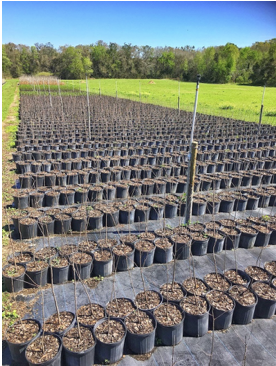
Alachua, FL (April 27, 2021) - Spring is here, and it’s time to start planting those Dunstan Chestnut orchards you’ve been planning all winter or add to your existing ones. The folks at Chestnut Hill Outdoors go to great lengths to ensure you receive the highest quality nursery stock, but the rest is up to you. If you want your trees to realize their maximum production potential, you should follow proper planting procedures.
Planning
It all starts with planning, and that begins with select species that are adapted to the local climatic conditions in your area. The USDA Plant Hardiness Zone Map is the best tool for determining this, and to ensure you pick the right plants for your region, Chestnut Hill Outdoors lists these Zones for each of their products. They also check all orders to make sure plant species are appropriately suited to their destinations. Dunstan Chestnuts are best suited to Zones 5-9.
Use the link to plug in the zip code where you will be planting.
USDA Plant Hardiness Plant Zone Map Link
You should also consider local site conditions. Elevation, directional orientation and proximity to bodies of water create local variations in temperature or micro-climates. For example, frost pockets may form at the bottom of valleys or even swales, whereas cold air drains off areas higher on hillsides, and south-facing slopes receive more direct sunlight. Soil type should also be considered because it can affect moisture availability. Dunstan Chestnuts will do best in well-drained sandy loam, and you should avoid low-lying areas.
There are some things you have no control over, like late spring freezes. Fortunately, Dunstan Chestnuts bloom later in the spring, so they are far less susceptible to broad-scale mast crop failures caused by late freezes. Just the same, if your trees have already started to grow and you expect a late freeze, employ protective measures like Grow Tubes and frost cloth.
Click for information on properly using frost cloth:
Planting
What you put in influences what you get out, so if you want the most from your trees, you should follow proper planting procedures.
You’ve already selected a site in the planning part. Now it’s time to decide on specific locations. Ideal spacing for Dunstan Chestnut trees is 35-40 feet apart. That may seem like a lot now, but as your trees grow, you’ll understand and appreciate why. You will find detailed planting procedures in the Learning Center on Chestnut Hill Outdoors’ website, but the following are some basic guidelines.
- Dig a hole 2 times wider than the pot for the roots to grow outward without crowding, but not deeper than the root ball.
- Plant the tree at the same depth it grew in the nursery (at the crown where the bark changed from green to brown).
- Partially fill the planting hole with the native soil.
- Set the tree in the middle of the hole with plenty of room for the roots.
- Add soil to secure the tree in a straight position, then fill with native soil, firming it around the lower roots to remove air pockets. Continue back-filling until the soil is level with the root collar.
- Create a water-holding basin around the hole and water the trees slowly at the drip line.
- After the water has soaked in, spread a protective layer of mulch 2- 4” deep around the trunk, pulling the mulch a few inches away from the trunk.
Chestnut Hill Outdoors recommends Grow Tubes for mast orchard plantings. Their tubes act like mini-greenhouses, recycling moisture from leaf transpiration to nurture growth of young seedlings until the tree is big enough to survive on its own. Tubes also provide protection against deer, rodent and rabbit browsing and can provide a barrier against herbicide drift if the herbicide is used to control weeds. Or, you can use weed mats.
Chestnut Hill Outdoors also recommends using a stake to keep the tree stable during its first season. If using Grow Tubes, staking the tree is unnecessary, but you will need to attach a stake to your grow tubes.
Chestnut Hill is the best place for you to purchase your food plot and deer attractant plants because they offer a large selection, their plants are specifically bred to attract deer, and they offer customers different sized plants at different levels of growth.
For more information, please visit